


Skip to main content




Artist/Maker
Paul Almásy
(French-Swiss, born Hungary, 1906 – 2003)
Date1961
MediumVintage ferrotyped gelatin silver print
DimensionsImage: 9 3/16 × 11 1/2 in. (23.4 × 29.2 cm)
Sheet: 9 3/16 × 11 1/2 in. (23.3 × 29.2 cm)
Credit LineGift of Thomas J. Wilson and Jill M. Garling, P2016
Object number2025.30.29
Not on view
DescriptionMaria Luisa Learns and Teaches: Despite the tremendous development of tourism over the past ten years, despite the experiences and impressions of millions of people who visit foreign countries and sometimes foreign continents every year as tourists, students, for business, scholars or journalists are our knowledge of everyday life of people living in distant countries is still poor. Could the traveler who sees the mountains of wonderful vegetables on the market of a large South American city imagine vegetable growers who do not know how to prepare carrots, peas or spinach; six-headed families who own a large house but only a drinking glass, because no one has ever drawn their attention to the harmful effects of health when six people drink from the same glass at meal time; women who don't know how to cook rice, etc... There are countless countries where you have to learn to wash your hands in school, because they never saw it in their parents' house. In many places, the consequences of poverty are still a question of ignorance. Millions of people who live in the country have never left their village and have never seen how other people live. Using a tablecloth while eating and arranging the dishes in a nice way, giving the food an appetizing appearance, storing the food supply in such a way that it is protected from insects and dust, these are all things the millions completely ignored by people. How can you teach them all this? The specialists in the fields of education, social sciences and healthcare, who have been dealing with this problem for years, unanimously believe that there is only one good practical solution: the teaching of parents by children. The children should teach their mother and father what they learn at school. In this spirit, courses for "better and healthier living" were introduced in several countries, especially in South America in primary and secondary schools. These courses are particularly important in rural areas. First, of course, the teachers themselves who lead these courses must be trained. Children are given a snack every day at school. They have learned that a small tablecloth is used when eating; Maria-Luisa has embroidered a very special doily for herself, Paraguay.
Collections
Additional Details
Markings
Verso, middle (encircled blue ink stamp): "Norsk Presse Service A/S NPS"
Verso, middle (black ink stamp): "ALMASY"
Verso, middle (black ink stamp): "ALMASY"
Inscribed
Verso, bottom left corner, sideways (pencil): "PAL-1598"
Verso, bottom middle (pencil): "76"
Verso, bottom middle (pencil): "76"
Paul Almásy
Date: 1961
Medium: Vintage ferrotyped gelatin silver print
Object number: 2025.30.23
Paul Almásy
Date: 1961
Medium: Vintage ferrotyped gelatin silver print
Object number: 2025.30.25
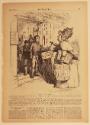
Thomas Nast
Date: published May 8, 1875
Medium: Wood engraving on newsprint
Object number: 2019.13.282
Paul Almásy
Date: 1961
Medium: Vintage ferrotyped gelatin silver print
Object number: 2025.30.26
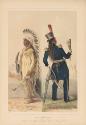
George Catlin
Date: 1845
Medium: Hand-colored lithograph on paper
Object number: 1959.127
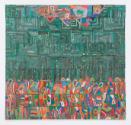
Elias Sime
Date: 2016
Medium: Reclaimed electronic components and insulated wire on panel
Object number: 2017.2
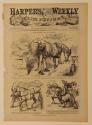
Thomas Nast
Date: published June 27, 1874
Medium: Wood engraving on newsprint
Object number: 2019.13.245
Thomas Nast
Date: published November 8, 1873
Medium: Wood engraving on newsprint
Object number: 2019.13.222
Michael Rakowitz
Date: 2020
Medium: Middle Eastern food packaging, Arabic-language U.S. newspapers, and glue, with accompanying didactic information
Object number: 2021.5.5
George Catlin
Date: 1845
Medium: Color lithograph on paper
Object number: 1959.126
George Catlin
Date: 1845
Medium: Color lithograph on paper
Object number: 1959.106